How to Build a Scalable eCommerce Platform for Business Growth


As traffic increases, ecommerce platforms often face slow load times, checkout issues during peak sales, and product catalogs that become difficult to manage. These problems are clear signs that the existing setup may not be designed for growth. Scalable ecommerce platform development addresses these challenges by creating systems that grow alongside your business without performance breakdowns during traffic spikes. Scalability is no longer optional. It is essential for long-term success in online retail. In this guide, we cover what makes an ecommerce platform scalable, the features that matter most, how to choose the right technology stack, and how Digital Factory 24 helps businesses build ecommerce platforms that last.
What Is a Scalable eCommerce Platform?
Definition and Core Characteristics
A scalable ecommerce platform is designed to handle growth in customers, orders, products, and markets without performance issues or major rebuilds. It typically runs on cloud infrastructure, uses modular architecture, and distributes workloads efficiently. Key characteristics include elastic server capacity, fast database performance under load, and the ability to add integrations without disrupting core functionality.
Scalable vs Traditional eCommerce Platforms
Traditional ecommerce platforms are built for predictable traffic and limited growth. They often struggle during high demand periods or when new features are added. Scalable ecommerce platforms are designed to adjust resources automatically, distribute load effectively, and support new channels, tools, and regions without affecting stability or customer experience.
Why Scalability Matters in Modern eCommerce
Modern ecommerce businesses face high customer expectations, frequent promotions, and rapid expansion across devices and markets. Without scalability, platforms rely on short term fixes that limit growth. A scalable ecommerce platform supports consistent performance, faster innovation, and long-term business expansion without constant technical intervention.
What Are the Benefits?
A scalable foundation allows businesses to grow without repeated replatforming. Teams spend less time managing technical issues and more time improving customer experience. New markets, channels, and features can be launched faster, while customers benefit from reliable performance and smooth shopping experiences at any scale.
Why Businesses Need Scalable eCommerce Solutions
Managing High Traffic and Peak Sales Periods
Events like Black Friday, holiday campaigns, and influencer-driven traffic surges can place heavy strain on ecommerce platforms. If a system cannot handle sudden increases in demand, businesses can lose sales and customers may stop trusting the brand. Scalable ecommerce platforms adjust resources automatically during peak periods and reduce capacity when demand falls, keeping performance consistent while managing infrastructure costs.
Supporting Business Expansion and Growth
Business growth often involves adding new product lines, launching regional storefronts, or expanding into B2B ecommerce. Scalable ecommerce development solutions support this growth without requiring a complete platform rebuild. The underlying architecture remains stable as the business expands, making it easier to move from one store to many or from local to global operations.
Enhancing Customer Experience Across Devices
Modern shoppers move between mobile, tablet, and desktop devices throughout the buying journey. A scalable ecommerce platform delivers consistent speed, usability, and design across all screen sizes. Omnichannel ecommerce solutions extend this experience across websites, marketplaces, mobile apps, and social commerce channels, helping build trust and repeat purchases.
Reducing Operational Bottlenecks
Disconnected systems create manual work and operational delays. Ecommerce integration services connect platforms with inventory, finance, and CRM systems, so data flows accurately in real time. This reduces errors, improves visibility, and allows teams to operate efficiently as order volumes grow.
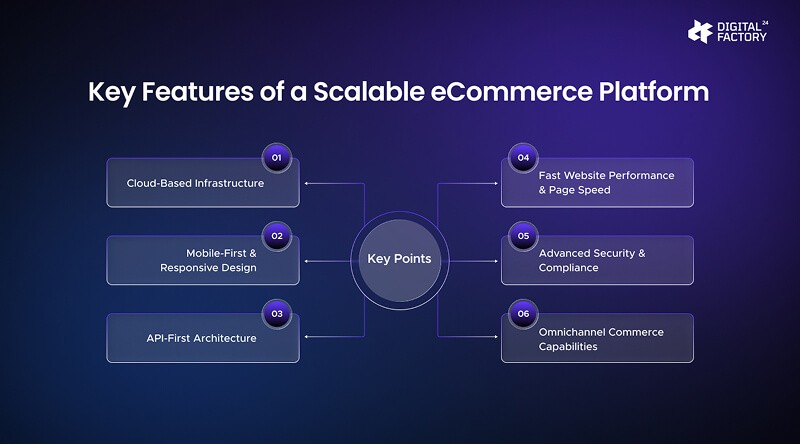
Key Features of a Scalable eCommerce Platform
Cloud-Based Infrastructure
A cloud ecommerce platform provides the foundation for true scalability. Cloud infrastructure allows your store to adjust computing resources based on demand, making it easier to handle traffic spikes. Platforms like AWS, Google Cloud, and Azure let businesses add server capacity quickly while reducing the overhead of maintaining physical hardware. Distributed data centers also support faster load times for global customers.
Mobile-First and Responsive Design
A large share of ecommerce traffic comes from mobile devices, making mobile first design essential. Designing smaller screens first improves load speed, navigation, and checkout usability on phones. This approach reduces cart abandonment and supports overall ecommerce performance optimization.
API-First Architecture
An API first architecture allows different parts of the ecommerce platform to communicate through clearly defined interfaces. This makes integration easier, supports component replacement, and enables headless commerce setups. For businesses building custom ecommerce platforms, API first design allows flexibility without disrupting core functionality.
Fast Website Performance and Page Speed
Page speed directly affects conversion rates and user experience. Ecommerce performance optimization includes using CDNs, compressing images, minimizing requests, and caching frequently accessed data. A well optimized platform delivers consistent performance across locations and devices.
Advanced Security and Compliance
As ecommerce operations scale, security becomes more critical. Platforms must meet standards such as PCI DSS and GDPR through encrypted data storage, secure payment handling, regular audits, and role-based access controls to protect sensitive information.
Omnichannel Commerce Capabilities
Modern customers interact with brands across multiple channels before completing a purchase. Omnichannel ecommerce capabilities connect social platforms, search, mobile, and desktop experiences into one system. Inventory, pricing, and order history remain consistent across all touchpoints, creating a unified shopping experience.
Choosing the Right eCommerce Technology Stack
SaaS vs Custom eCommerce Development
SaaS platforms like Shopify and BigCommerce offer fast setup and low maintenance, making them suitable for smaller businesses with simple requirements. However, they often limit customization, data ownership, and feature flexibility.
Custom ecommerce development provides full control over platform behavior, integrations, and user experience. While it requires more upfront investment, it is better suited for businesses with complex workflows, unique product structures, or long-term growth goals.
Headless Commerce and Composable Architecture
Headless commerce separates the front end from the back end, allowing teams to build fast and flexible user experiences using frameworks like React or Next.js while core commerce functions run independently.
Composable architecture extends this model by letting businesses select individual tools for payments, search, inventory, and reviews, all connected through APIs. This approach supports gradual evolution without rebuilding the entire platform.
Selecting the Right CMS and Framework
The right CMS determines how easily teams can manage product pages, content, and campaigns. Headless CMS platforms like Contentful, Sanity, and Strapi work well with modern ecommerce stacks by giving marketers control while preserving developer flexibility. A balanced setup supports faster content updates without slowing development.
Cloud Hosting and Scalability Considerations
Cloud hosting is central to ecommerce scalability. Auto scaling handles traffic spikes, while multi-region deployments improve global performance. Enterprise platforms often combine cloud hosting with containerization and orchestration tools to manage resources efficiently and support long term growth.
Essential Integrations for Enterprise eCommerce Platforms
ERP and CRM Integrations
An enterprise ecommerce platform must integrate with ERP systems to synchronize inventory, financials, and fulfillment data in real time. CRM integration gives sales and support teams a complete view of customer history, preferences, and interactions. These integrations reduce manual work and minimize data inconsistencies across systems.
Payment Gateway Integration
Payment integration is a critical part of the checkout experience. A scalable ecommerce platform supports multiple payment gateways such as Stripe, PayPal, Braintree, and regional providers, along with various payment methods including cards, digital wallets, and buy now pay later options. Proper integration also addresses security and compliance requirements.
Inventory and Order Management Systems
As order volumes increase, inventory management requires automation. Integration with an order management system provides real-time inventory visibility, automates fulfillment workflows, and improves delivery tracking. This is especially important for businesses operating multiple warehouses or third-party logistics partners.
Marketing Automation and Analytics Tools
Enterprise ecommerce platforms must integrate smoothly with marketing and analytics tools. Email marketing, retargeting platforms, push notifications, and analytics dashboards rely on accurate customer and product data. Strong integrations enable better targeting, clearer performance measurement, and faster data driven decisions.
Best Practices for Scalable eCommerce Development
Optimizing Website Performance
Ecommerce performance optimization is a continuous effort rather than a one-time task. Using a CDN reduces latency, while lazy loading makes images load only when required. Server-side rendering or static site generation improves page load speed for product pages. Regular audits with tools like Google Lighthouse help identify issues before they impact the customer experience.
Building an SEO-Friendly eCommerce Architecture
An SEO friendly ecommerce architecture includes clean URLs, fast load times, structured data for products and reviews, and proper handling of duplicate content caused by filters or pagination. A clear internal linking structure also improves crawlability. Building technical SEO into the platform from the beginning gives product pages a stronger ranking foundation.
Improving Mobile Commerce Experience
Mobile commerce optimization goes beyond responsive layouts. It focuses on simplified checkout flows, support for digital wallets like Apple Pay and Google Pay, touch-friendly product galleries, and persistent carts that retain items across sessions. These improvements reduce friction and increase conversions on mobile devices.
Designing a User-Centric Shopping Journey
Scalable ecommerce platforms are designed around real customer behavior. This includes intuitive navigation, detailed product information, transparent pricing, genuine reviews, and a streamlined checkout process. Ongoing user testing helps identify drop-off points and opportunities to improve completion rates.
Implementing Scalable Database Structures
As catalogs and order data grow, database performance becomes increasingly important. Scalable database structures rely on indexing, caching layers, and techniques like read replicas or sharding to manage query load. Planning for data growth early prevents performance bottlenecks later.
The Role of AI and Automation in Modern eCommerce
AI-Powered Product Recommendations
Recommendation engines analyze browsing history, purchase patterns, and product relationships to surface relevant items for each shopper. This increases average order value and reduces the time customers spend searching for products. For large catalogs, AI powered recommendations are essential for making the full product range discoverable.
Personalized Shopping Experiences
Personalization extends beyond product recommendations. It includes dynamically adjusting homepage content, promotional banners, and email messaging based on customer behavior. Businesses using personalization achieve higher engagement, longer sessions, and stronger repeat purchase rates. AI-driven customer experiences make storefronts feel tailored to individual users.
eCommerce Chatbots and Customer Support
.AI powered chatbots manage a large portion of customer support inquiries such as order status, returns, and product questions. This keeps support costs under control as order volumes increase and provides fast responses at any time. Complex issues are escalated to human agents with full context.
Predictive Analytics and Automation
Predictive analytics analyze historical data to forecast demand, identify churn risks, and highlight inventory needs. Automation acts on these insights by triggering campaigns, restocking inventory, or adjusting pricing. This allows businesses to scale efficiently without increasing headcount proportionally.
Common Challenges in Scaling an eCommerce Platform
Slow Website Speed and Downtime
Speed issues are often the first sign that an ecommerce platform is struggling to scale. These problems are caused by unoptimized images, excessive third-party scripts, inefficient database queries, or limited server capacity. Downtime during high traffic events like flash sales can damage customer trust. Building ecommerce infrastructure with redundancy and auto scaling helps prevent both speed issues and outages.
Security and Compliance Risks
As transaction volume grows, ecommerce platforms become more attractive targets for attacks. Businesses face threats such as credential stuffing, payment fraud, and data breaches. Staying compliant with PCI DSS, GDPR, and other regulations requires continuous effort. Security must be built into the ecommerce platform architecture from the start rather than added later.
Managing Large Product Catalogs
Large catalogs with thousands of SKUs, variations, and bundles can strain product management systems. Search performance drops, category pages slow down, and inventory errors increase. A scalable ecommerce platform manages this through efficient database design, dedicated search tools like Elasticsearch or Algolia, and clean data structures.
Handling Complex Third-Party Integrations
Each new integration introduces potential failure points. Payment gateways, shipping providers, and ERP systems frequently change APIs and data formats. Managing these integrations requires proper documentation, testing, and ownership. Ecommerce integration services with ongoing maintenance help reduce risk and downtime.
Future Trends in Scalable eCommerce Platform Development
Composable Commerce
Composable commerce is emerging as a leading approach for enterprise ecommerce development. Instead of depending on a single platform, businesses create their stack using best in class components connected through APIs. This model gives businesses the flexibility to upgrade or replace individual components without rebuilding the entire system.
Headless eCommerce Growth
The headless approach is gaining momentum as businesses focus on front end performance and design flexibility. A headless ecommerce platform separates the user experience from the commerce logic, enabling faster load times, richer interactions, and easier expansion to channels like voice commerce and digital kiosks.
AI-Driven Customer Experiences
AI is becoming a central part of modern ecommerce platforms. It powers dynamic pricing, fraud detection, conversational commerce, and personalized experiences. Businesses that adopt AI early are better positioned to improve engagement and maintain a competitive edge.
Global and Multi-Store Commerce Expansion
More businesses are expanding globally at an early stage. This requires ecommerce platforms that support multiple currencies, languages, tax rules, and fulfillment systems within a single interface. Multi store architecture allows brands to manage regional storefronts with local customization while maintaining centralized control.
How Digital Factory 24 Helps Businesses Build Scalable eCommerce Platforms
Custom eCommerce Development Services
At Digital Factory 24, we build ecommerce platforms designed around your business needs. Our custom ecommerce development services cover architecture planning, technology selection, front end development, back-end engineering, and quality assurance. We build ecommerce platforms that are ready to scale as your business grows.
Enterprise eCommerce Solutions
Our enterprise ecommerce development services address complex needs such as multi-channel selling, ERP integration, performance optimization, and security compliance across regions and customer segments.
Cloud and Performance Optimization Expertise
We specialize in cloud ecommerce platform setup and ecommerce performance optimization on AWS, Google Cloud, and Azure. Our approach includes CDNs, caching, and load testing for speed and reliability.
End-to-End eCommerce Strategy and Support
We provide end-to-end ecommerce strategy and support, including planning, development, performance monitoring, ongoing optimization, and strategic guidance to help your ecommerce platform grow and evolve.
Conclusion
A scalable ecommerce platform lays the foundation for long-term business growth by allowing you to handle increased demand without compromising performance. It supports expansion into new markets, simplifies the addition of new features, and keeps customer experience consistent at every stage. Choosing the right approach early helps you avoid costly rebuilds and keeps your focus on growing your business.
Building a Future-Ready eCommerce Platform for Long-Term Growth
Creating a future-ready ecommerce platform means building with flexibility, performance, and growth in mind from the start. It allows your business to adapt quickly to changing market trends, customer expectations, and increasing demand without disruption.
By focusing on scalable architecture and integrations, you can support ongoing innovation while maintaining a smooth and reliable shopping experience. This approach helps your platform stay relevant and competitive as your business continues to evolve.
Ready to scale your ecommerce business without limits? Connect with Digital Factory 24 and build an AI-powered ecommerce platform designed for long-term growth and performance.
Explore our digital product engineering, DevOps engineering, Drupal development, AI automation, cloud modernization, and digital transformation services to build a future-ready business ecosystem that drives innovation, scalability, and revenue growth.
FAQ