Enterprise Web Development Lifecycle: From Strategy to Scalable Deployment


One can build a business website easily, but it is more complex to create an enterprise web application. Almost every project in enterprises brings multiple teams, higher expectations from users, interconnected systems and compliance requirements together. Without clear roadmap, every project will lead to missed deadlines, unexpected expenses and technical problems. That's why, enterprise web development lifecycle provides a simple roadmap to keep the complex projects on track. Every team in the enterprise will benefit from this roadmap by following the rules throughout the project. It includes planning, analysis, architecture, design, development, testing, deployment, and ongoing support. This helps them maintain security, scalability, and reliability. This blog explores the major stages of the enterprise web development lifecycle, explains the purpose of each phase, and highlights key considerations for delivering successful enterprise web solutions.
What Is the Enterprise Web Development Lifecycle?
The enterprise web development lifecycle refers to a structured framework for building, deploying, and maintaining enterprise web applications. The framework guides the teams through planning, development, testing, launch, and ongoing support to achieve business goals.
How It Differs from Traditional Website Development
Enterprise web application development lifecycle is different from traditional websites. The traditional websites are designed in such a way that showcases the information and supports basic interactions. But web development lifecycle provides access controls, third-party integrations, and the exchange of data across multiple systems.
Core Objectives of an Enterprise Development Lifecycle
The core objectives of an enterprise development lifecycle are to reduce project risks, strengthen security, maintain regulatory compliance, and support long-term application maintenance and performance.
Why a Structured Web Development Process Matters for Enterprises
Business Alignment and Strategic Planning
There should be a connection between business goals and technical execution for most projects. The web development process will help teams define objectives, priorities, and success metrics before any development begins. This will help project decisions align with business requirements.
Faster Delivery with Reduced Risk
Teams should identify challenges early and decide. This will help them to keep the projects on schedule and deliver faster and reduce the risk associated with it.
Long-Term Maintainability
The web development process will make it easier to maintain and update enterprise applications over time. Without affecting existing functionality, teams will manage the changes by following the provided coding standards and documentation.
Stage 1 – Business Discovery and Requirement Analysis
Understanding Business Goals
Every enterprise website development project should begin with a clear understanding of business objectives. These may include revenue growth, operational improvements, better customer experiences, or process automation. Defining goals early helps guide development priorities.
Stakeholder and User Requirement Gathering
Enterprise projects involve multiple stakeholders with different needs. Gathering input from departments and end users helps teams identify requirements, priorities, and potential challenges before development begins.
Defining Success Metrics
Success metrics provide a way to measure project outcomes. Common benchmarks include conversion rates, page performance, system availability, and productivity improvements. Establishing these metrics early helps teams evaluate progress and make informed decisions throughout the development lifecycle
Stage 2 – Solution Architecture and Technology Planning
Selecting the Right Technology Stack
Choosing the right technology stack requires evaluating factors such as team expertise, long-term support, scalability, and integration requirements. The goal is to select technologies that align with business and technical needs.
Designing a Scalable Architecture
A strong web application architecture supports growth in users, data, and transactions. Whether using microservices, modular monoliths, or cloud-based solutions, architecture decisions should balance performance, flexibility, and maintenance requirements.
API and System Integration Planning
Enterprise applications often connect with CRM platforms, ERP systems, payment gateways, and internal databases. Planning integrations early helps identify technical dependencies, data flow requirements, and potential security concerns before development begins.
Stage 3 – UX/UI Design and Experience Strategy
User-Centered Design Principles
Effective enterprise design focuses on how users interact with a system. Understanding the needs of employees, customers, and other user groups helps create interfaces that support efficient and intuitive workflows. As organizations increasingly adopt AI-powered applications, user experiences must also be designed to accommodate intelligent features such as personalized recommendations, predictive insights, and conversational interfaces. Integrating artificial intelligence into the UX strategy ensures enterprise applications remain intuitive, efficient, and scalable while improving user engagement and productivity
Accessibility and Responsive Design
Enterprise applications often serve diverse audiences across multiple devices. Accessibility supports a better experience for all users, while responsive design allows applications to function consistently on desktops, tablets, and smartphones.
Building Consistent Design Systems
For custom web development projects, design systems promote consistency across screens and features. Standardized components and design guidelines help teams maintain a unified user experience while simplifying future updates and enhancements. This approach is especially valuable for Drupal development, where reusable components, flexible content structures, and scalable design frameworks enable organizations to deliver consistent digital experiences across enterprise websites.
Stage 4 – Enterprise Web Application Development
Front-End Development
Front-end development focuses on building user interfaces that are responsive, accessible, and consistent across the application. Component-based frameworks help teams manage growing application complexity.
Back-End Development
The back end manages business logic, data processing, and communication with databases and external systems. In enterprise web application development, this layer must support performance, security, and long-term maintenance.
Integration and Feature Development
At this stage, teams connect internal systems, third-party APIs, and data sources while developing the features identified during discovery and planning. These integrations support the application's core business functions.
Stage 5 – Quality Assurance, Security, and Performance Testing
Functional Testing
Functional testing verifies that features work correctly across different user roles, devices, and browsers. It also evaluates business workflows and system interactions.
Security Testing
Security testing helps identify vulnerabilities before deployment. Common activities include penetration testing, authentication reviews, authorization checks, and data protection assessments.
Performance and Load Optimization
For scalable web applications, performance testing measures how the system responds under varying traffic conditions. Load testing helps identify bottlenecks, resource limitations, and performance issues before they affect users. These insights support a stable and reliable application experience after launch.
Stage 6 – Deployment, Launch, and Continuous Delivery
Cloud Deployment
Modern enterprise software development often relies on cloud infrastructure to support scalability and operational requirements. The choice between public, private, or hybrid cloud environments depends on business, security, and compliance needs.
CI/CD Best Practices
CI/CD pipelines automate code integration, testing, and deployment. This approach helps reduce manual effort, supports frequent releases, and improves deployment consistency.
Production Readiness
Before launch, teams should validate application performance, monitoring capabilities, and recovery procedures. Production readiness checks help identify issues before deployment and support a smoother transition to live environments.
Stage 7 – Monitoring, Maintenance, and Continuous Improvement
Performance Monitoring
After deployment, enterprise web development services should include ongoing performance monitoring to identify issues such as slow response times, system errors, and unusual traffic activity.
Security Updates and Compliance
Enterprise applications require regular security updates and periodic compliance reviews. These activities help address emerging vulnerabilities and support industry regulations.
Feature Enhancements and Optimization
Following launch, teams review user feedback and application data to identify improvement opportunities. Incremental updates, feature enhancements, and performance adjustments help keep the application aligned with changing business and user requirements.
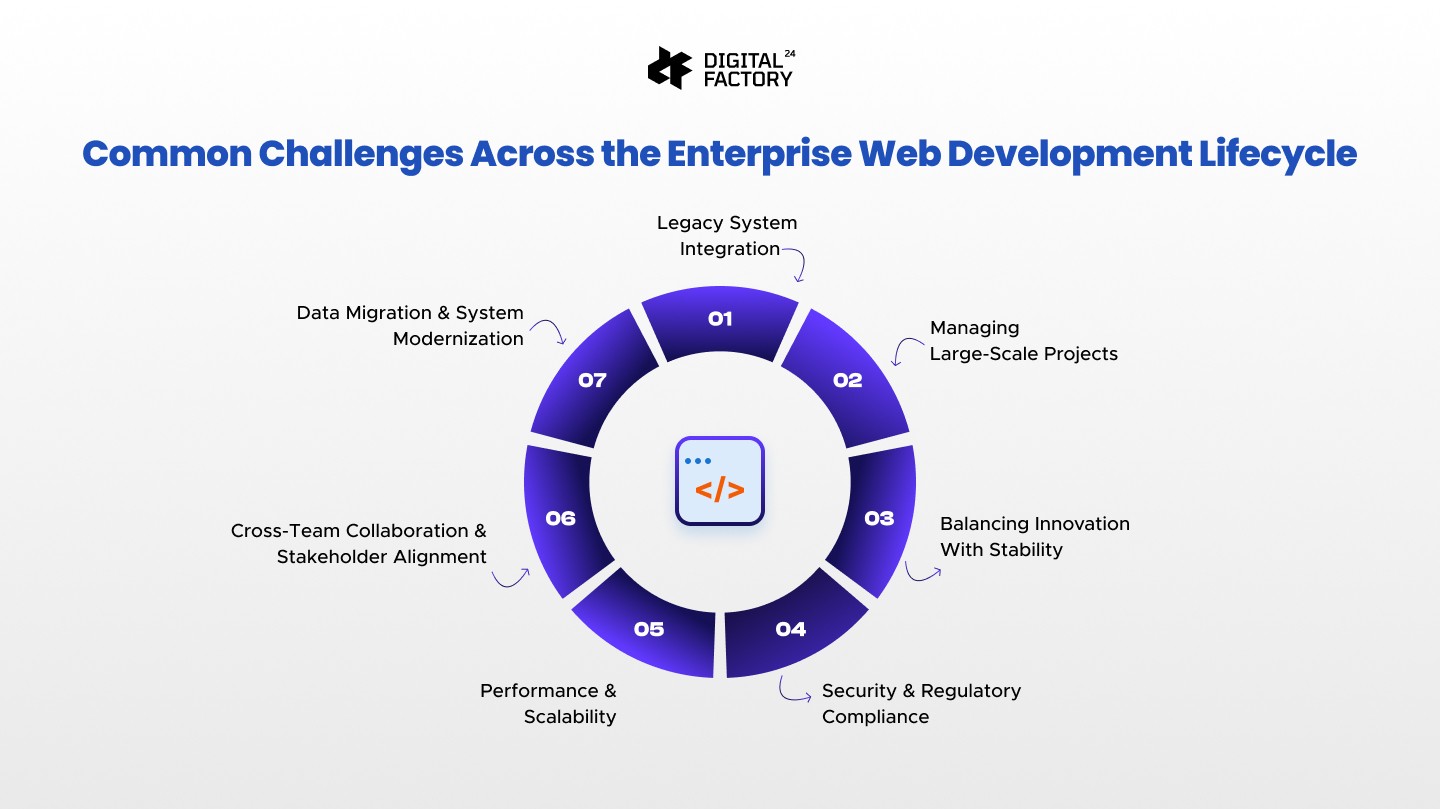
Common Challenges Across the Enterprise Web Dvelopment Lifecycle
Legacy System Integration
Many enterprise web development projects require integration with legacy systems. Connecting modern applications with older infrastructure can involve custom integrations and phased migration approaches.
Managing Large-Scale Projects
Enterprise initiatives often involve multiple teams, stakeholders, and technical disciplines. Coordinating resources, timelines, and communication is essential for keeping projects on track.
Balancing Innovation with Stability
Organizations frequently adopt new technologies to remain competitive. At the same time, business-critical systems must remain reliable and operational. Balancing innovation with stability is a common challenge throughout the development lifecycle.
Security and Regulatory Compliance
Enterprise applications must protect sensitive business and customer data while complying with industry regulations and security standards. Implementing secure coding practices, regular vulnerability assessments, and compliance monitoring helps reduce security risks.
Performance and Scalability
As user traffic and business operations grow, enterprise applications must maintain fast response times and consistent performance. Scalable architectures, cloud infrastructure, caching strategies, and performance optimization are essential for supporting long-term growth.
Cross-Team Collaboration and Stakeholder Alignment
Enterprise web development often involves business leaders, developers, designers, QA teams, and operations working together. Clear communication, shared objectives, and continuous feedback help ensure successful project delivery and reduce misunderstandings.
Best Practices for Building Scalable Enterprise Web Applications
Adopt Agile and DevSecOps
Combining agile methodologies with DevSecOps practices helps teams deliver updates efficiently while integrating security throughout the development lifecycle.
Design for Scalability from Day One
Scalability should be considered during planning and architecture design. Selecting suitable infrastructure and architecture patterns allows applications to support growing business and user demands.
Prioritize Security and Compliance
Security and compliance should be part of the development process from the start. This approach helps organizations address regulatory requirements and reduce potential security risks.
Measure Performance and Business Outcomes
Successful enterprise web application development depends on both technical and business results. Tracking performance metrics alongside business objectives helps teams evaluate application effectiveness and identify areas for improvement.
Conclusion
Throughout the process, each team manages complex projects more efficiently and maintains better control by following a structured enterprise web development lifecycle. With the help of this, teams will find a way to reduce risks and achieve better results. Organizations will achieve better results when they follow every stage of the development process. From planning and development to testing and ongoing maintenance, each step plays a key role in delivering long-term business value.
Build Your Next Enterprise Web Application with Confidence
Whether you're modernizing an existing platform or building a new enterprise web application from the ground up, Digital Factory 24 delivers secure, scalable, and future-ready enterprise web development solutions. Connect with our experts to discuss your project and accelerate your digital transformation journey


