Cloud Migration Strategy: Comprehensive Enterprise Guide

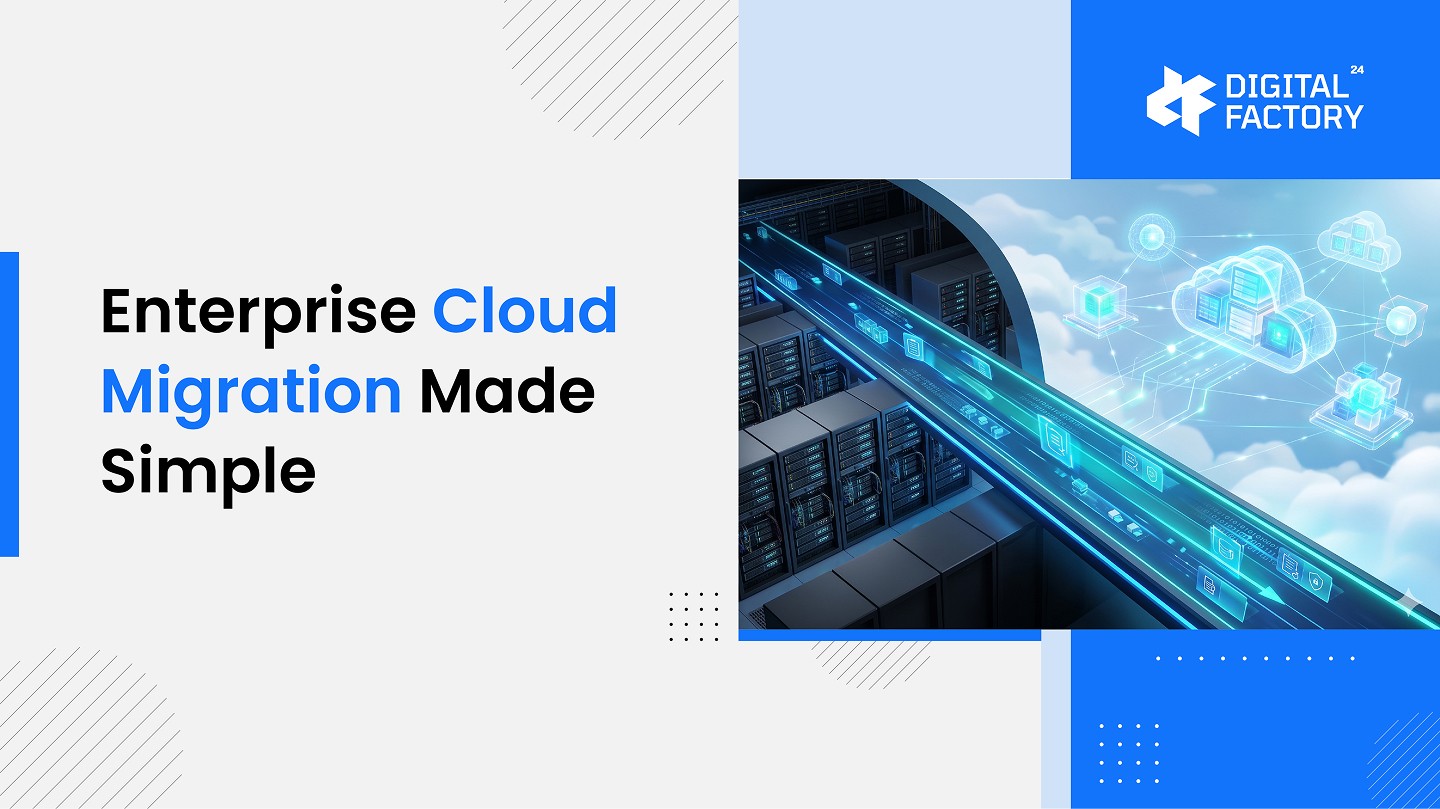
The cloud migration strategy involves the process that is needed for any organization to move its own data and applications from their on-premises system to a cloud. In 2026, moving your business to the cloud is one of the most important decisions that your team should make. Each stage of cloud migration strategy involves preparation, planning, migration, operation, and optimization. If cloud migration is done properly, you will achieve real flexibility and faster product delivery. This blog will help you understand what a real cloud migration strategy will look like at the enterprise level. It covers the earliest assessment of work all the way through the ongoing management that keeps your cloud environment healthy.
Common Cloud Migration Failures in Enterprise Environments
One-Time Deployment Mindset
Every business should be very cautious at this stage. The path to Cloud Migration is a long-term business decision, and it’s not a one-time IT project. Each team in a cloud migration company or others will rush through the planning phase. Without rethinking how the systems work, they will move the entire systems into the cloud. In the end, they will be confused with higher cloud bills, and it’s not their regular old data center costs.
Poor Execution Pace and Planning Gaps
Some teams move too quickly and skip critical steps. Others move too slowly, spending so much time building a perfect plan that competitors have already pulled ahead. Neither approach works.
The companies that get it right treat cloud migration as an ongoing conversation between technology and business strategy. They bring in experienced cloud consulting services early. They build a clear picture of what they're working with today and map out where they want to be in three to five years. Then they move in phases.
Phase 1: Inventory
Pre-Migration Infrastructure Assessment
Before your team migrates a single workload, you need a clear inventory of your current environment. This means understanding which applications you run and what they depend on. You need to know how they talk to each other. You also need to understand what happens to the business if any of them go down for an hour, a day, or a week.
Dependency Mapping and Technical Debt Analysis
This discovery work brings problems to the surface before they cause damage. You might find undocumented dependencies between systems. You might find applications built on outdated code that will break during migration. You might find databases that have not been properly maintained in years. Better to find these things now than mid-migration.
Six R's Workload Classification
A good cloud consulting services team will run this assessment systematically. They will categorize your applications into groups. Some can move to the cloud with minimal changes. Some need to rework. Some need to be rebuilt from scratch. And some should not move at all. They are better off staying on-premises or retiring entirely.
This categorization work is sometimes called the "six R's" of migration:
Retire
Retain
Rehost
Replatform
Repurchase
Refactor
It is the foundation that every subsequent decision rests on. Skip it, and you will make expensive assumptions that come back to cause problems.
Phase 2: Roadmap
Full-Stack Cutover Risks
Not every application needs to move at the same time. Trying to move everything at once is one of the most reliable ways to disrupt operations, exhaust your team, and blow past your budget. It rarely ends well.
Workload Sequencing by Priority and ROI
A phased roadmap lets you sequence migrations based on what matters most to the business. Some organizations start with lower-risk applications. Internal tools, test environments, and development infrastructure are good starting points. Teams can build experience and confidence before tackling the systems the business depends on daily. Others prioritize the applications that would benefit most from cloud scalability. Those tend to be the ones causing the most pain right now.
SLA-Aligned Timeline and Risk Definition
Your cloud migration company should help you build a roadmap that is honest about timelines and realistic about risk. It should be clear about what each phase will deliver in terms of business value. A roadmap that promises everything in six months but requires every team to work nights and weekends is not a plan. It is a wish list.
Phase 3: Infrastructure
Public vs. Private vs. Hybrid Cloud Trade-offs
One of the most common mistakes enterprises make is treating cloud infrastructure like a commodity. AWS, Azure, and Google Cloud are not interchangeable. A public cloud is not always better than a private or hybrid setup. The right cloud infrastructure services for your organization depend on your specific workloads, your compliance requirements, your existing vendor relationships, and your team's current skills.
Compliance and Data Residency Requirements
Regulated industries like healthcare, finance, and government often have strict data residency and security requirements. Those requirements push organizations toward private cloud or hybrid cloud models. They need more direct control over where their data lives and who can access it.
Organizations with highly variable workloads have different needs. A retailer whose traffic spikes during the holiday season benefit most from public cloud infrastructure services. They can scale resources up quickly and scale them back down just as fast. They do not pay for capacity they do not need year-round.
Multi-Cloud Orchestration and Governance
In most large enterprises, the answer is some combination of environments. A hybrid or multi-cloud setup lets different workloads run where they make the most sense. Managing this kind of environment well requires deliberate design choices upfront. It also requires a commitment to cloud management services that keep everything running smoothly over time.
The infrastructure decisions you make here will shape your costs, your performance, and your operational complexity for years. Take the time to get them right.
Phase 4: Migration
Data Integrity and Compatibility Risk Assessment
The actual migration work involves moving data, applications, and services from your current environment to the cloud. This is where careful planning pays off most visibly. Even with the best roadmap, migrations carry risks. Data can be corrupted in transit. Applications that work fine on premises can behave unexpectedly in a cloud environment. Users can run into performance issues or access problems. None of this is inevitable, but all of it requires preparation.
Parallel Environment and Load Testing
Professional cloud migration services include rigorous testing at every stage. Before anything goes live, your team should run applications in a parallel cloud environment. Validate that data has migrated accurately. Confirm that integrations with other systems still work. Stress-test performance under realistic load conditions. Do not skip these steps.
Rollback Architecture and Failover Protocols
Every migration phase needs a clearly defined process for reverting to the previous state if something goes wrong. This is not pessimism. It is the kind of professional discipline that separates experienced teams from teams that are learning on the job.
Cutover Scheduling and Change Management
For large enterprises, it often makes sense to migrate during lower-traffic periods. Phase the cutover in stages. Communicate clearly with business stakeholders about what to expect and when. Users who know a system is being upgraded are far more patient than users who encounter problems with no explanation.
Phase 5: Security
Shared Responsibility Model
Security is one of the areas where enterprises most frequently underestimate the work involved in cloud migration. Moving to the cloud does not automatically make you more secure. In some cases, it can introduce new vulnerabilities if the move is not handled carefully.
IAM Policies, Network Perimeters, and Encryption
Access controls, encryption, network security, and compliance requirements all need to be reassessed for your new cloud environment. Permissions that were tightly controlled on-premises can accidentally become too open in the cloud. Data that was protected behind a physical firewall now needs different protections.
Shift-Left Security Integration
Working with a cloud migration company that takes security seriously means building security controls into the migration design from the start. Security should not be an afterthought addressed after go-live. Identity and access management, data encryption, security monitoring, and compliance validation should all be part of your migration checklist from day one.
Phase 6: Management
Post-Migration Operational Overhead
Here is something that surprises many organizations when they first move to the cloud. The work does not end when the migration does. In some ways, it is just beginning.
Cloud environments require ongoing attention to stay healthy, secure, and cost-effective. Without active cloud management services, organizations often find themselves paying for resources they are not using. They run systems with outdated configurations. They miss security patches. And they struggle to understand why their cloud costs keep climbing month after month.
Monitoring, Cost Optimization, and Compliance
Good cloud management means continuous monitoring of performance and availability. It means identifying and resolving issues before they affect users. It includes regular cost optimization to avoid paying for idle resources. It also includes governance practices that keep your environment organized and compliant as it grows.
Managed Services vs. In-House Operations
For many enterprises, this ongoing management is one of the strongest arguments for working with a dedicated cloud management services partner. Building and retaining the internal expertise required to manage a complex cloud environment is expensive. It takes time. A partner who does this work every day for multiple clients brings depth of experience that is genuinely hard to replicate internally.
Evaluating Cloud Consulting Services for Enterprise Needs
Requirements Gathering Before Architecture
The market for cloud consulting is crowded, and the quality varies significantly. Good consultants ask more questions than they answer in the early stages. They want to understand your business, your current pain points, your team's capabilities, and your goals. They are not just focused on your technical environment.
On-Premises vs. Cloud Suitability Analysis
If your plan is unrealistic, a good cloud consulting partner will say so clearly. If a particular application is better off staying on-premises, they will tell you that too. Even if it reduces the scope of engagement.
KPI-Driven Migration Outcomes
The goal is not just to move workloads to the cloud. It is to improve business outcomes. Cost reduction, faster time to market, better reliability, and improved security posture. These are the metrics that matter to your leadership team, and they should matter to your cloud consulting partner too.
Long-Term Optimization Beyond Initial Cutover
The organizations that get the most value from cloud migration treat it as a continuous improvement process. Not a project with a defined end date. A consulting partner who disappears after the initial migration is only solving part of the problem.
The Right Time to Start
There is rarely a perfect time to begin a cloud migration. There is always another product launch, another quarter-end push, another reason to wait. But the costs of staying on aging infrastructure grow over time. Maintenance costs rise. Opportunities get missed. The gap between what your teams can do today and what cloud-native competitors can do keeps widening.
The right approach is not to wait for the perfect moment. Start with an honest assessment of where you are. Build a realistic plan for where you want to go. Work with a cloud migration company that has the experience to help you get there without unnecessary risk.
Start Your Cloud Migration with Digital Factory 24
Digital Factory 24 works with enterprises at every stage of the cloud journey. From the initial assessment through migration and into long-term cloud management. If you are thinking about moving to the cloud, or if you are in the middle of a migration that is more complicated than expected, we would be glad to have a conversation about what is possible.
Frequently Asked Questions